
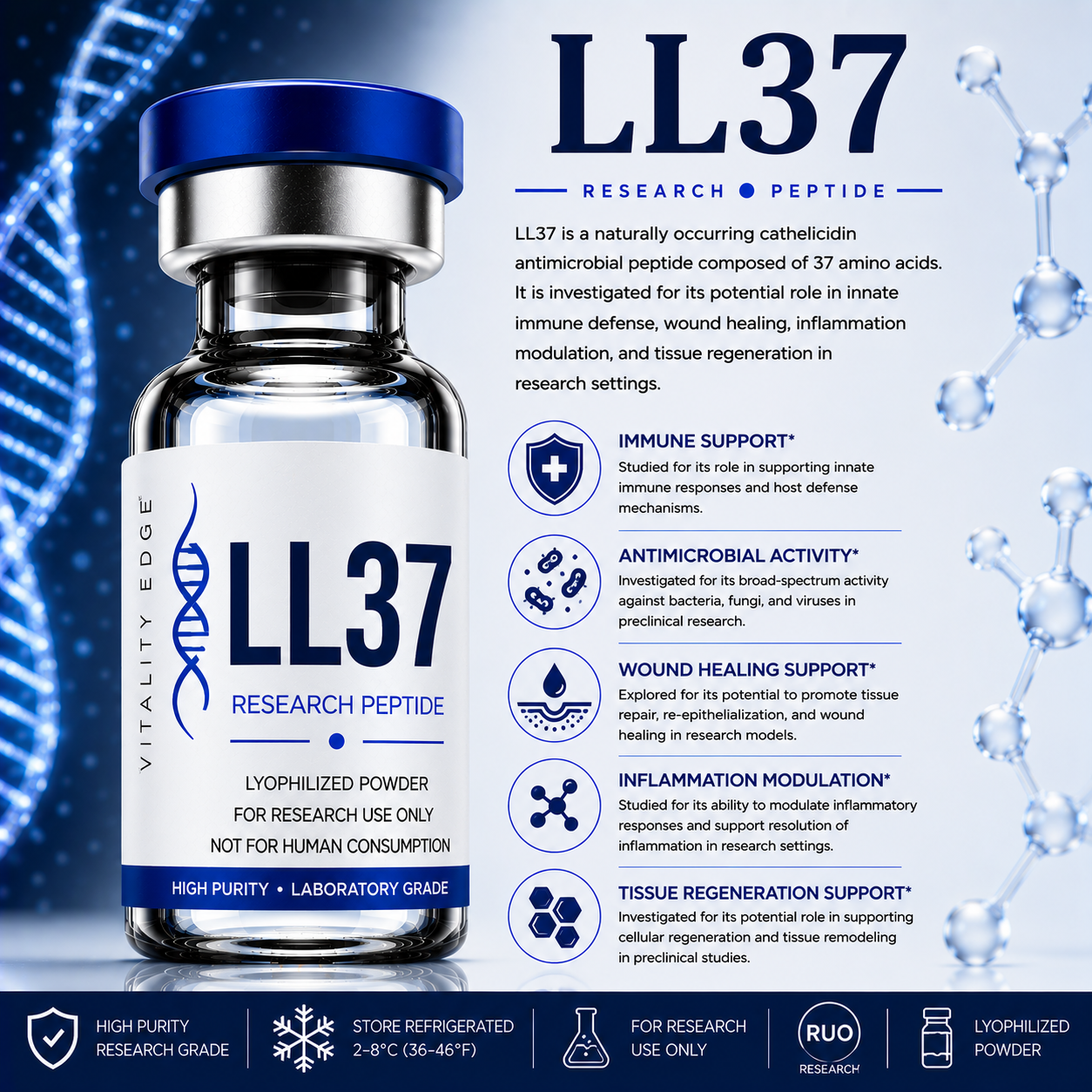
LL-37 (aka Human Cathelicidin Antimicrobial Peptide or CAMP), is produced by many cell types including natural killer (NK) cells, white blood cells, and skin cells. In addition, different body systems such as the respiratory system, gastrointestinal tract, testes, and ocular surface also produce LL-37.
Its immune-modulating activities have the potential to accelerate tissue recovery and significantly improve the survival rate of patients with chronic debilitating medical conditions. It serves a critical role in the innate immune system by defending against bacterial infections. LL-37 can interact with the molecules of the cell wall and perforate cytoplasmatic membranes resulting in bacterial cell death. In addition, LL-37 helps promote wound closure by stimulating the formation of new blood vessels (angiogenesis).
LL-37 (aka Human Cathelicidin Antimicrobial Peptide or CAMP), is produced by many cell types including natural killer (NK) cells, white blood cells, and skin cells. In addition, different body systems such as the respiratory system, gastrointestinal tract, testes, and ocular surface also produce LL-37.
Its immune-modulating activities have the potential to accelerate tissue recovery and significantly improve the survival rate of patients with chronic debilitating medical conditions. It serves a critical role in the innate immune system by defending against bacterial infections. LL-37 can interact with the molecules of the cell wall and perforate cytoplasmatic membranes resulting in bacterial cell death. In addition, LL-37 helps promote wound closure by stimulating the formation of new blood vessels (angiogenesis).